
Maretta Aivazian: on Resilience, Identity and the People Who Shape Us
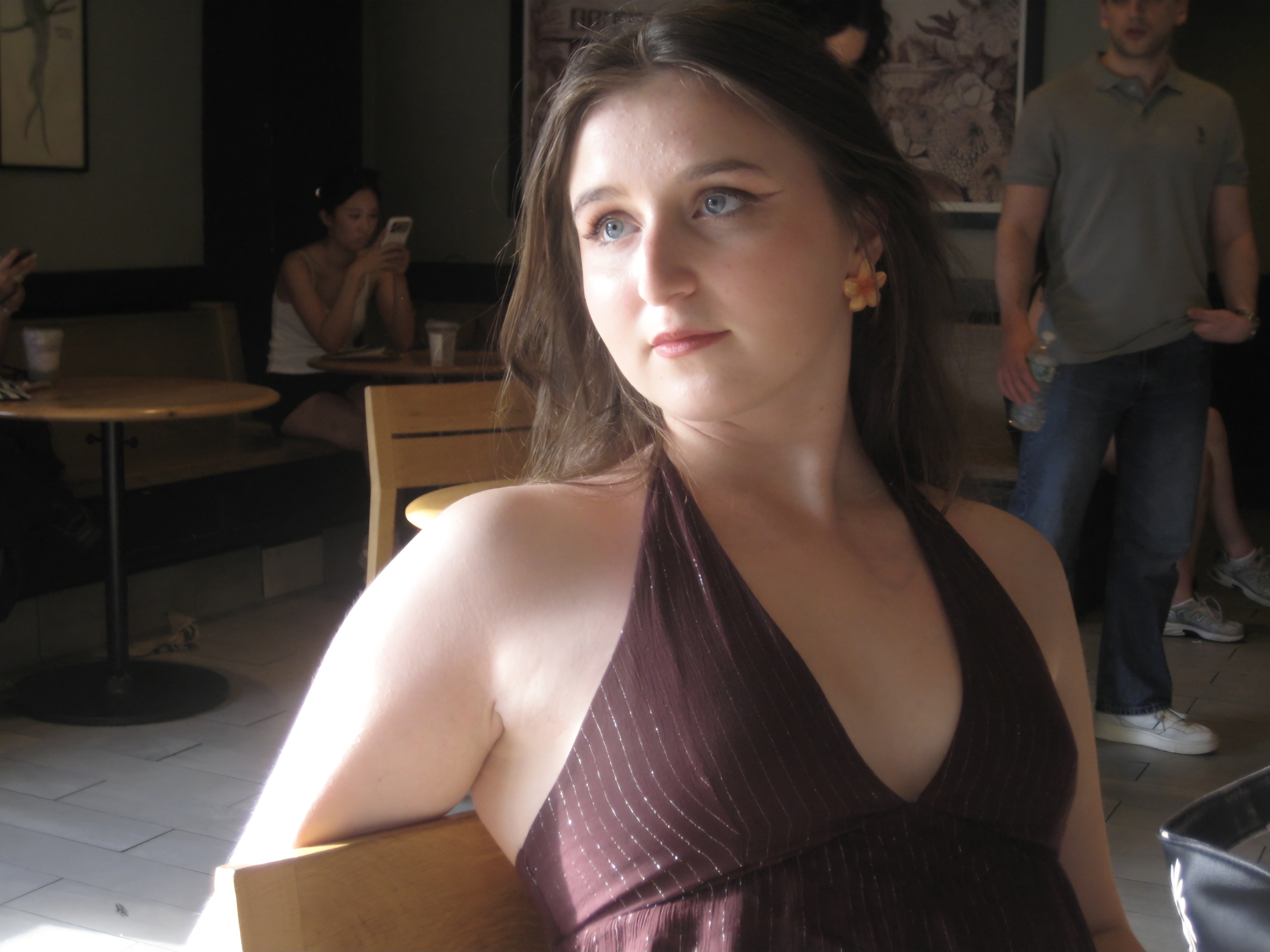
Updated: Oct 16

From what I’ve seen of your work, your Armenian heritage seems to be a significant source of inspiration. Have you always felt creatively connected to your cultural background, or is that something that has evolved into over time?
Actually no, quite the opposite. I was born and raised in Russia, and I moved to Armenia only in 2019. Unfortunately, me growing up in a village in the south of Russia left a big mark on me and my identity as I was always ashamed of being different, and I was constantly reminded of that fact by everyone around me, including my teachers and schoolmates. It left a big scar, making me resent the way I looked and the fact that I didn’t even speak Armenian at all due to being ashamed of knowing another language. Now my art is a tender letter to little Mara, acknowledging her pain and nostalgia, and all those years that she missed, now that I’m reclaiming my culture in every way I can.

If someone were encountering your work without any prior knowledge of Armenian culture, what would you hope they would take away from it? What role do you think art can play in preserving a culture’s stories, traditions, and collective memory?
I hope they pick up the resilience that I try to show through my colors, which are always warm and nostalgic. And why resilience? Because we are still here no matter what. My art is mostly a dream of the Armenia that never was, the country that was not allowed to be peaceful. I hope people see us as a serene and chill nation that have tremendous amount of sorrow for the times that we were never given a chance.
What does femininity mean within your artistic practice, and how does it find its way into your work? Are there women who have significantly shaped your path, either through their advice and support, either by simply serving as role models?
I love women. Women are the beginning of life, and I am fortunate to be raised by two strong women - my mother and grandmother. They are my role models, though both of them had a very difficult life. They thought me resilience, and through their life experience I am privileged to have a life that I want to live, the life that I'm choosing myself. My second-year university professor is another woman I am forever grateful for. We are still in touch, and I am honored to have her in my life. She taught me patience and kindness in a way I never even thought I needed. She is a true mentor figure to me. And of course, there are famous women that give me motivation to keep going, the list is continuous, but I will just say that they are all girls’ girls.

How do memory and family history make their way into your work? Is there a particular personal experience, story, or memory that you’ve translated into your art?
My grandmothers. Both from maternal and paternal sides. Both of them are in my art - a certain type of fusion of both of them. My art is a long-forgotten memory of just observing them and it's my attempt now to remember what it felt like to be a child, who was playing fairy tales in my grandmother's gardens, and then running back and watching her wash freshly harvested tomatoes from that same garden. I cannot say that it’s one memory - it’s a combination of small, fractured pieces here and there that I try my best to save and share with the world.

Artists often develop recurring symbols or motifs that become closely associated with their work. Salvador Dalí had his melting clocks, Frida Kahlo her thorns and roses, and Sylvia Plath used the fig tree as a metaphor in The Bell Jar. Is there an image, symbol, or motif that keeps reappearing in your work? What does it mean to you?
My colors are always the same. I found the palette that expresses this nostalgia that I long for. And it resonates with people, so I must be doing something right. I love patterns, especially Armenian ornaments, I use them as much as I can. But other than that, I would say it’s objects from my grandmother’s closet - like the cookie jar that has no cookies in them, or Czech china that is just staying there behind the glass cupboard.

As a woman working in the creative field, have you ever felt pressure to create a particular kind of work in order to be accepted within the artistic community? If so, how have you navigated those expectations?
I am fortunate enough to say that no, I have not felt that I needed to be accepted in the artistic community. Probably also because where I live now, I don’t feel the presence of an artistic community or the need to be a part of them. However, as a woman, I always felt overlooked or that I needed to prove myself worthy to be hired, because of men. And recently I’ve been fortunate enough to work with a human rights organization that doesn’t make me feel that way.

Bluestockings Society is often a space for young women, writers, and artists. At a time when so much attention is directed toward technological development, while the arts are sometimes overlooked, what advice would you give to young artists trying to find their place and sustain a creative practice?

Don’t listen what tech bros are trying to trick us with. The inevitability of AI. No. Art is a form of human expression and it’s never going to disappear. Art creates connection, and people can never be isolated forever. Covid 19 was the biggest proof of that - we almost got mad, all of us across the globe. And it’s especially important that women are acknowledged and appreciated and seen in male-dominated spheres.


Comments