
Aseniya: on Women in History, Cultural Representation & Artistic Influence
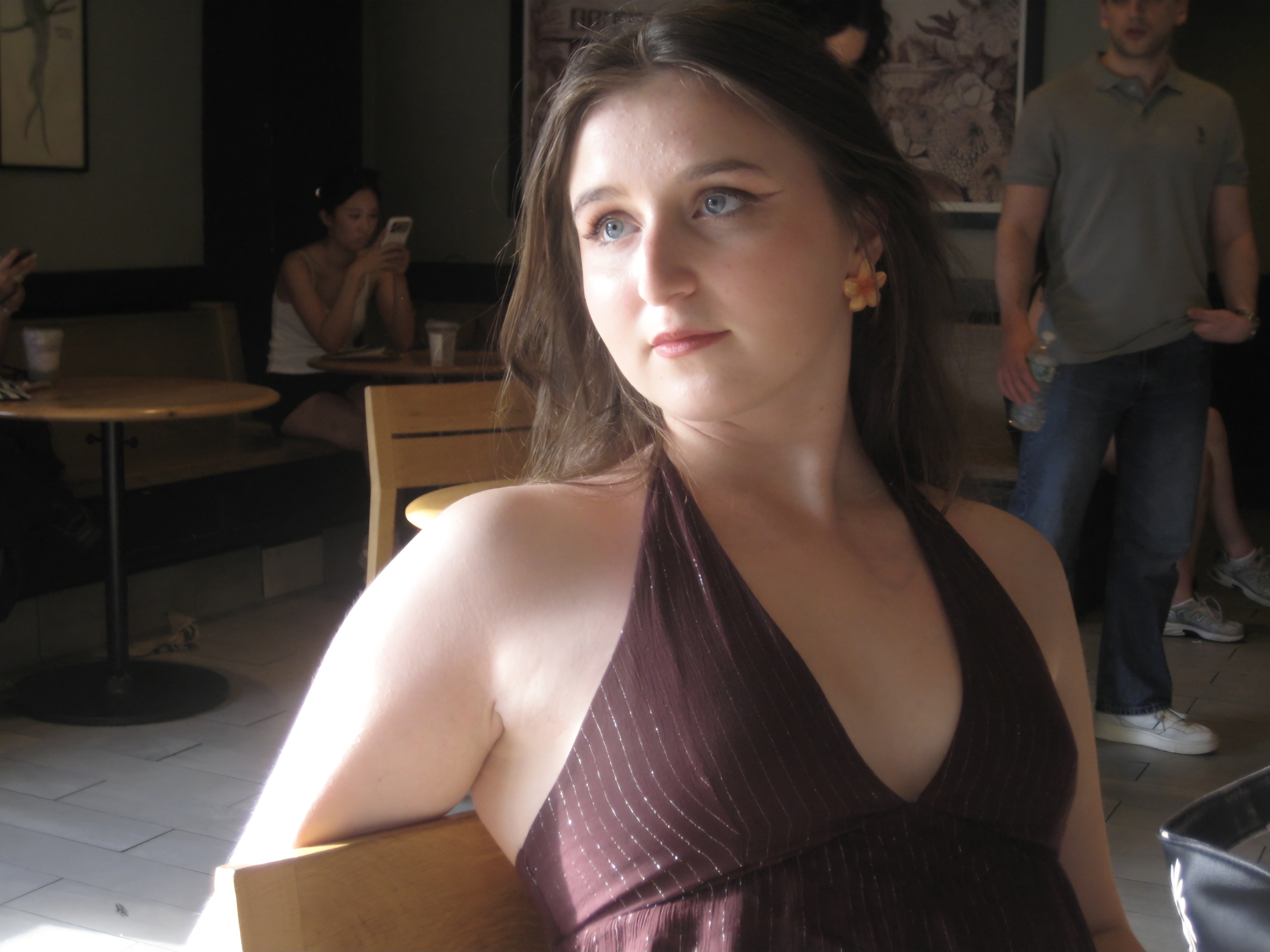
Updated: Oct 16

Could you tell us a little about yourself and your artistic development? Did you always take a liking to drawing or is it a passion you've discovered later in your life?
My name is Aseniya, which means born in autumn - and that actually turned out to be true!
I’ve been drawing for as long as I can remember. When I was seven, my parents enrolled me in an arts school where my dad worked. I did a bit of everything back then: singing, piano, dancing, and drawing. Honestly, until I wa
s about 14, I didn’t take any of it too seriously, I actually dreamed of going into medicine.
When I hit 14, I went through that typical teenage crisis, and drawing naturally became my safe haven. Before that point, I wasn’t particularly good at art - our classes were mostly focused on small crafts, light sculpting, and chatting over tea. I honestly don’t have a single decent piece saved from those early years! But at 14, I decided to teach myself portraiture on my own.
I started drawing my favorite actors and musicians, entering beginner art contests, and sketching illustrations for fan fiction. It was pure fun.
Seeing my passion, my parents eventually encouraged me to study architecture so I could put my drawing skills to practical use.
However, I had zero desire to become an architect. Between the ages of 17 and 21, I went through a severe period of depression. I struggled to draw anything for myself, my skills regressed significantly, and I reached a point where I wanted to abandon art altogether.

What brought me back was another huge source of comfort in my life: cinema. I began finding deep inspiration in cinematic frames and theater aesthetics.
It reignited my creative spark and motivated me to start sharing my journey on Instagram.
Films by directors like David Lynch, Christopher Nolan, and Tom Ford had such a profound impact on me that they completely solidified my decision to commit my life to art. Over time, I’ve built a deep appreciation for iconic filmmakers including Lynch, Parajanov, Hitchcock, Billy Wilder, Tom Ford, and many others, whose visual storytelling continues to shape my artistic vision.
Many of your drawings seem to draw inspiration from well-known TV shows, films, and books. Is there a particular work that has had the greatest influence on your art? What is it about this story or world that resonates with you?

A lot of my artwork is deeply inspired by film and literature. If I had to single out my biggest influences, I constantly find myself returning to George R.R. Martin’s universe and classic 20th-century cinema. I really enjoy depicting scenes set in historical eras.
That said, I wouldn’t tie my style to one specific fictional universe. Most of my work is about capturing my own personal impression of a moment rather than just recreating a movie frame. Moving forward, I want to bring my own original concepts to life. I’m shifting from my sketchbook to real canvases. I’ve already started making progress with oil painting for my personal home collection, practicing by painting portraits of my loved ones.
Are there any women (artists, writers, people in your life, or otherwise) who have particularly influenced your work? Or supported you towards your artistic goals?

Women occupy the most important place in both my life and my art. I wouldn’t point to specific figures because, for me, it’s the very concept of womanhood that matters.
However, womanhood has never been about femininity to me. In fact, I completely reject the terms feminine and masculine - they’ve followed me and the women around me my entire life. Whenever I created high-quality work, teachers would label me a great artist with a masculine style. It felt as though my ability to feel deeply and express those emotions through art meant that my gender could not take credit for that talent.
To me, every single woman who has reached her goals despite experiencing trauma or violence is a role model. Every woman who continued to create despite not fitting into conventional standards. Every woman who refused to conform to a male-dominated world or blush at patronizing compliments about having a masculine mind and character.
Women and femininity seem to have a large presence in your work. What draws you to exploring them through your art? What emotions or experiences do you hope to communicate through your depictions of femininity, whether they relate to suffering, love, peace, or something else entirely?

For centuries, women’s names were erased from art history, and their work was co-opted by men. The world has lost countless geniuses simply because of the sex they were born with. That is why my ultimate goal is deep collaboration among women - as the primary driving force in contemporary art.
I don’t see women in art as fragile, romantic figures, I see them as the Creators themselves. Art, as the highest peak of human intelligence, can only be matched in its power by life itself and the act of creation. And creation is inherently bound to women.
That is precisely how I want to portray the women I paint. Of course, each of them possesses individual emotions and traits I aim to capture - whether it’s love, serenity, or longing - but above all, I want to emphasize their grandeur, majesty, and power.
Your Slavic heritage seems to be an important source of inspiration in your work. Are there any particular Slavic folk motifs, symbols, or traditions that you find yourself returning to, or that hold a special meaning for you?

Being Ukrainian is a central part of my identity, and the motifs of my homeland deeply resonate through my work.
My connection to my roots is woven from several threads. I frequently find myself returning to our unique traditional folk music, which I’ve studied since my days at the arts school. There’s also something incredibly moving about hearing our traditional Christmas carol - Shchedryk, known worldwide as Carol of the Bells - echoing through the streets, no matter where I am in the world.
Throughout my art education and architectural studies, I was constantly surrounded by the works of iconic artists like Illya Repin, Zinaida Serebriakova, Kazimir Malevich, Oleksandr Murashko, and Mykhailo Dmytrenko. We regularly created studies based on their masterpieces, and that foundation naturally shaped my visual perspective. But since cinema holds a special place in my creative process, I always encourage people to discover the legendary director Sergei Parajanov, whose cinematic heritage is a true treasure of Ukraine. His striking visual storytelling is something I constantly reflect on.
Above all, what connects me most deeply to my culture is my love for the Ukrainian language. To me, there is no stronger symbol of Ukraine than its native tongue. Although I grew up speaking mostly Russian in daily life - largely because it was imposed on our society - speaking Ukrainian always brings warmth to my heart.

I adore the melodic quality and rich symbolism of my mother tongue. Every word and the way concepts intertwine carries profound metaphor. Take my absolute favorite example: the word kokhannya.
In Ukrainian culture, love isn’t a one-size-fits-all concept. We distinguish between two distinct words: lyubov and kokhannya. You can feel lyubov for anything or anyone - food, objects, pets, or hobbies. But kokhaty is reserved for that one special person - a feeling bound by passion, deep tenderness, and a devotion that transcends all else.
This linguistic nuance creates a fascinating cultural concept: a hierarchy of love. Love is never flat or uniform. And that is precisely why it’s hard for me to name a single dominant film universe in my art - I can love (lyubyty) many artistic worlds at once, but my true, singular passion (kokhannya) is reserved for a human being, not for art itself.
What advice would you give to someone who is just beginning their artistic journey? Looking back, is there anything you wish you had known or approached differently when you first started drawing?
My main piece of advice would be: don’t chase after a specific style or try to play the role of the ideal artist. Most of the time, that leads nowhere.

Finding your style is a cumulative process. If you’re just starting out, it’s completely natural that your work doesn’t show a single, cohesive style yet. What’s worse, though, is isolating yourself to imitate another artist’s style. Copying is great for practice, but if your entire body of work becomes just a shadow of someone else’s, you’ll spend a long time searching for yourself in that darkness.
I’m speaking from experience - I used to be someone who constantly looked for inspiration in other female artists, trying to adopt their styles, mindsets, and messages. But because those things weren’t authentically me, I could never stick with any of them for long.
Don’t be afraid of appearing weird, unappealing, boring, or overly eccentric. The internet today is saturated with formulaic content, where a lot of art is built around what went viral for someone else rather than what truly reflects who I am. Don’t be afraid to put out work that genuinely excites you, along with your raw emotions. Even if it feels ordinary to you, or, on the flip side, so niche that only a few people will appreciate it.


Comments